
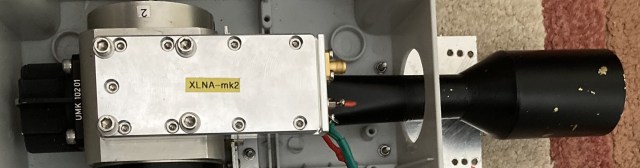
Having had good results on receive with my initial setup and established a baseline the next stage was to try and optimise things even more.
I was very fortunate to recently obtain a wave guide (WG) switch so I finally had the missing part to help move from a coax based system to WG16 and reduce the system losses.
I already had an SMA to WG transition and two different feed horns both with WG flanges. The plan was to use these plus my existing Kuhne LNA (MKU LNA 102 A2) with the new WG switch. When I tried this combination I found that my Kuhne (unconditionally stable) LNA became unstable. Investigation showed that it was unstable if used with anything that had a 22mm round pipe to WG16 transition.
I experimented with different transitions each with a different length taper, tried different overall lengths and different feed horns (Chaparral and G3PHO) on the end of the 22mm pipe. I also tried an expensive well known “off-the-shelf” SMA to WG transition in place of my homemade ones but I still could not resolve the problem.
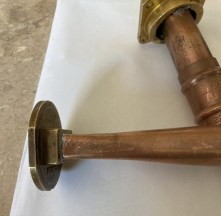
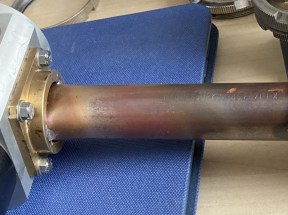
Having tested with a known SMA to WG transition the only unknown was the feed horn. With this in mind I decided to make a W2IMU feed horn.
My 1.2m off-set dish has an f/D of 0.61 so the following dimensions were used for the W2IMU horn:

W2IMU Feed Horn Dimensions
The conical section was made from copper sheet, 1.2mm thick. The dimensions for this were calculated using an online tool. To test that I’d got things right I cut and formed the shape out of thick cardboard to ensure that the transition between the two tubes was correct. Once I was happy the shape was cut from copper sheet. This was then annealed (to soften the copper) which then enabled me to hand form the shape around a length of wooden dowel.
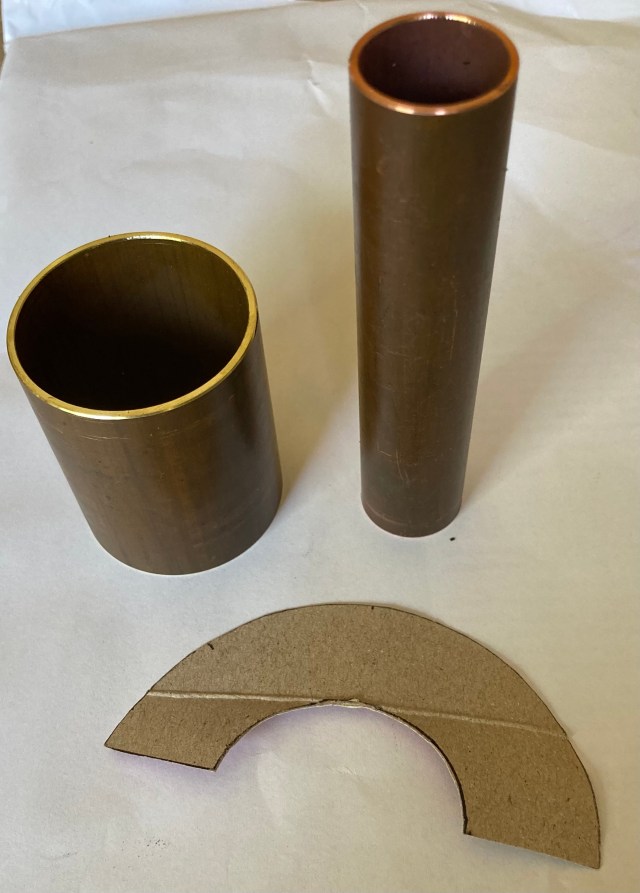
Now for the tricky bit… how to align and solder the three parts together without it all falling apart or me suffering any burns. Clearly some form of jig was needed.
Having given it some thought I devised the following based around some threaded studding and a number of appropriately sized discs. The discs were positioned where there was a change in diameter so they aligned and kept each part in place. The top and bottom nuts kept the three circular sections in compression.
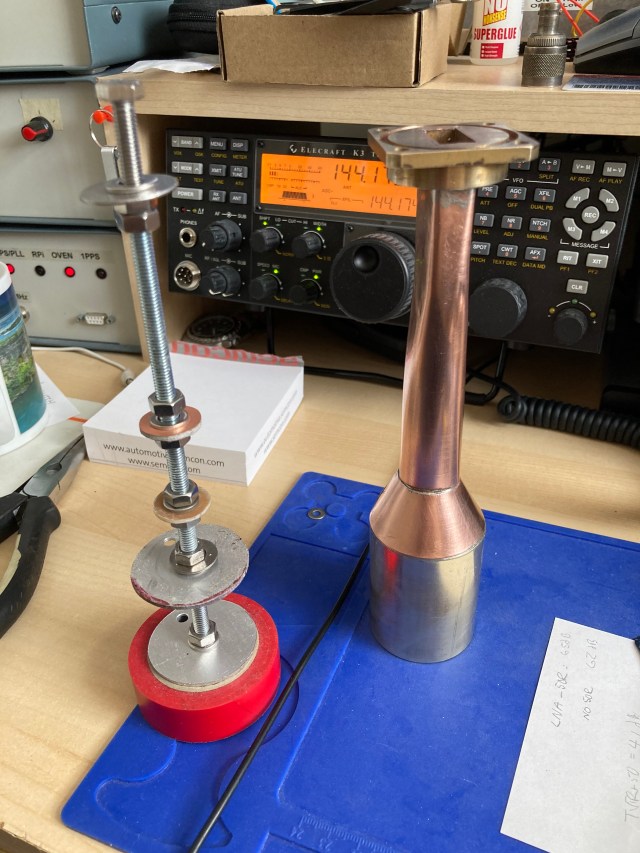 The jig worked really well, the three parts were soldered together and once they had cooled the alignment was checked and then the square flange soldered in place.
I had great hopes that with this well proven feed the LNA would be happy. Alas that was not the case, it continued to show signs of instability. As luck would have it Jan, PA0PLY posted a message to say that a some DU3T WG XLNAs were available. A short time later I had the XLNA fitted to the WG switch and everything was stable.
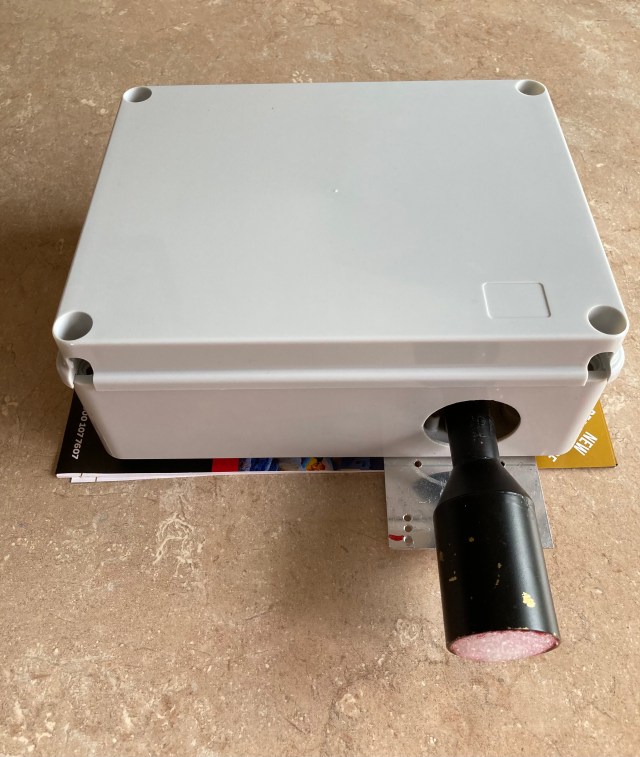 All the WG parts were shoe-horned in to a plastic waterproof enclosure. A 3D-printed collar and skirt were printed to to go round the feed horn and WG respectively.

3D-printed Feed Horn Collar
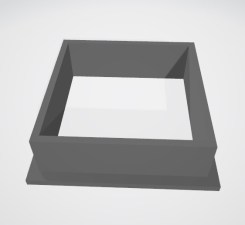
3D-printed WG16 Skirt
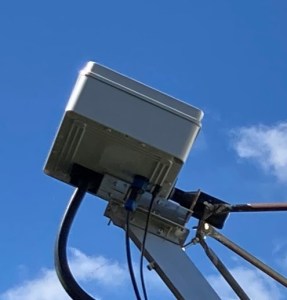
W2IMU Feed Enclosure On 1.2m Dish
With the W2IMU feed horn position carefully optimised the Sun and Moon noise measurements compare favourably with the VK3UM EMECalc predictions and are certainly better than my previous setup. Moon noise averages 0.5dB.
 G4HSK
G4HSK 